 Learn Arabic
Category:
Difference between Fusha and Amiyah Arabic

SchoolBoy
The Arabic language that we usually learn so far is actually different from that spoken by Arabs in general. Why so? One of the factors, because Arabic has a very broad root vocabulary. The difference in one letter is also very meaningful, especially in a certain expression, Arabic has a lot of ways to express it. Because of the vast vocabulary, Arabic also has different dialects between countries and even certain regions. However, these different dialects still have one origin, namely Official Arabic, Baku, or what we are usually familiar with Fusha Arabic.
Arabic Fusha
Fusha Arabic is a language commonly used for official matters, both in lectures, state speeches, announcements, official letters, books, scientific journals and so on. Fusha Arabic is also closely related to the rules of Arabic, so we are advised to be more careful in writing or speaking because small mistakes can lead to other meanings even far different. Fusha Arabic, if we are more detailed, can be divided into 2, namely Classical Arabic and Contemporary Arabic. Broadly speaking, the two are not much different from each other, but we can discuss it as follows:
1. Classical Arabic
Classical Arabic has a high level of fluency, usually found in the Koran and hadith, as well as in Arabic poetry. It is not surprising that only a few people can really understand it properly and correctly considering the use of its vocabulary is so deep and full of meaning that if it is not understood correctly, it can lead to misinterpretation.
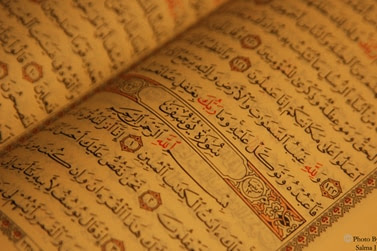
Therefore, the Qur'an and hadith have certain explanations in various essays by scholars such as; Tafsir Ibn Kathir, Tafsir As-Suyuthi and also Syarh Riyadhusshalihin, and others so that we can understand it properly.
2. Contemporary Arabic
This is an adaptation of Classical Arabic in modern times where the emergence of many new vocabularies that were not previously found in Classical Arabic, whether this is due to the development of civilization, foreign cultural influences, or the like so that Arabic itself also needs to adapt to it. Therefore, there are many new vocabulary and terms in Arabic.
Amiyah Arabic
Amiyah Arabic if we interpret the language is Arabic slang or slang. This type of Arabic is closely related to local local culture so that it has different dialects for each region so that it is generally used in daily or non-formal activities. However, as mentioned above, Amiyah Arabic is basically derived from Fusha Arabic, but is affected by internal and external influences such as colonization and war, for example, so that some dialects have a mixture with other languages such as Algerian, Moroccan and Tunisian dialects. That way Amiyah Arabic is not so tied to the rules of Arabic that is good and right. As mentioned above, this language has various dialects that differ between countries, regions or regions. These differences can be described as follows:
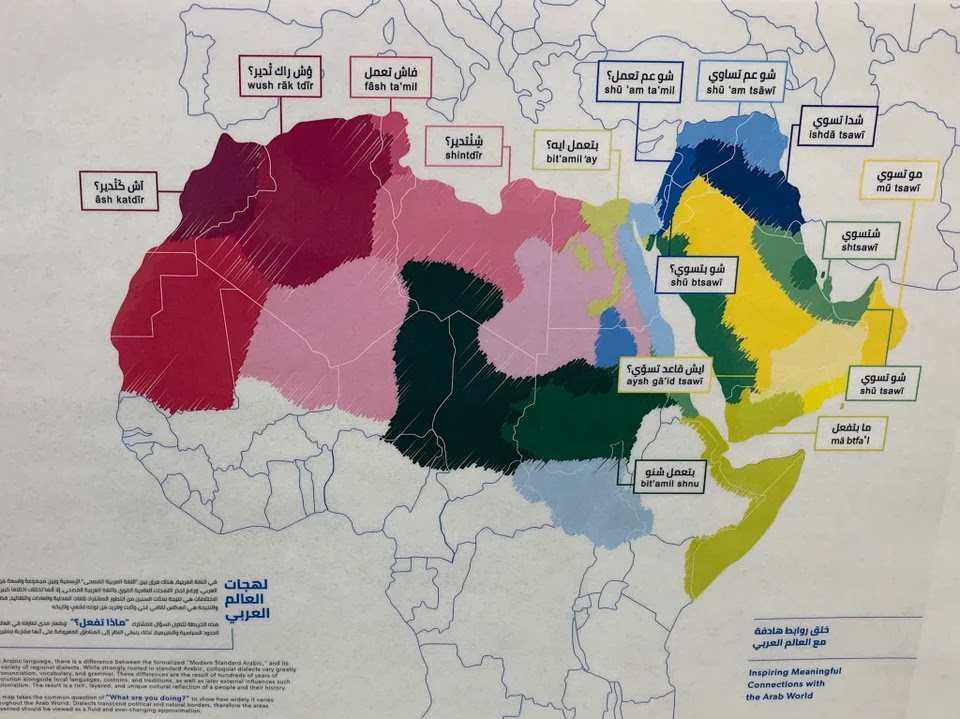
The picture above is an example of the expression اذا ل؟ (fusha) which means "what are you doing?" in various dialects. The picture is only a partial example because in fact it can be a lot. If we take the example of Morocco, the expression this only represents an area in Morocco, while in other regions it does not necessarily use the same expression, even has many different expressions.
By studying Arabic, be it Fusha or Amiyah, we can realize that Arabic is rich in vocabulary and meaning, rich in culture, and rich in history.
SchoolBoy
FounderAdmini like coffee sometimes